24 October 2026 · 6 minute read
Ride Belted in a Motorhome, Never in a Travel Trailer
- 16 is the age line. In California, every rider 16 and up must wear a seat belt in a moving motorhome, the same as in a car.
- Kids under 16 need a belt or a car seat. Kids under 8 ride in a car seat or booster.
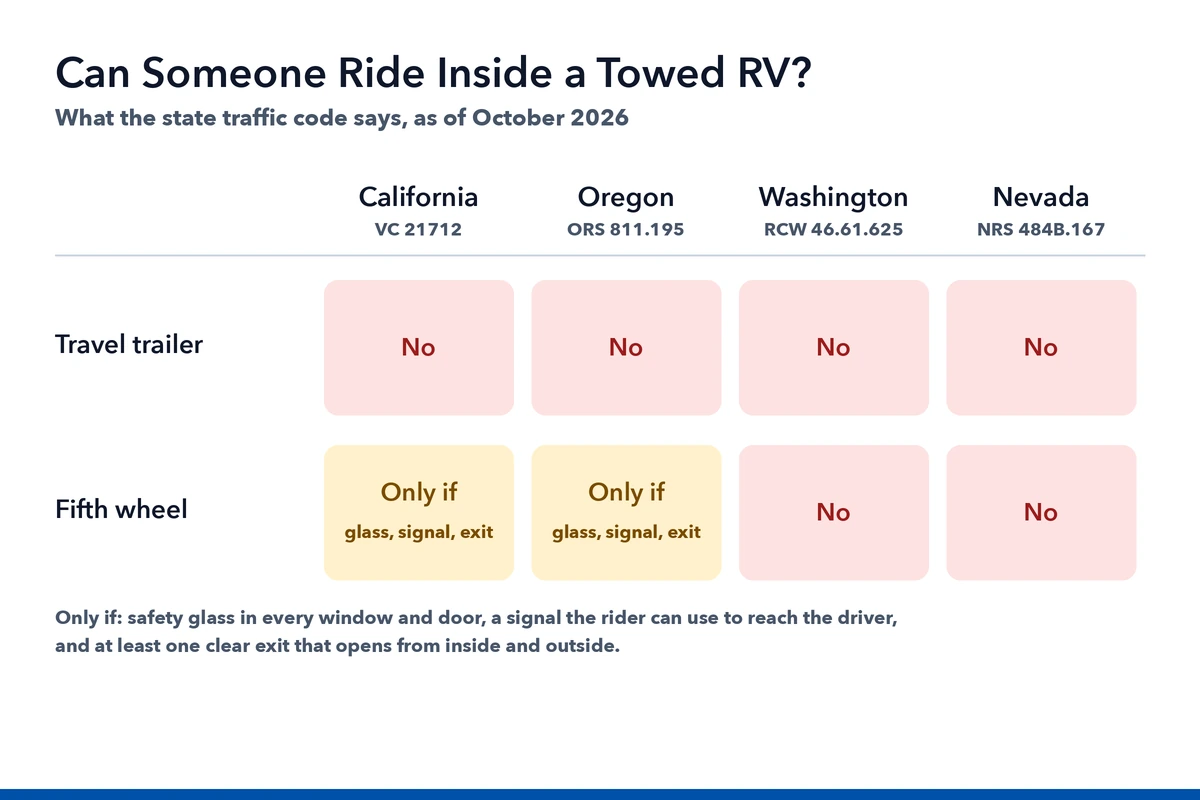
- No one may ride in a towed travel trailer in California, Oregon, Washington or Nevada.
- A fifth wheel can carry riders in California and Oregon only with safety glass, a signal to the driver and an exit that opens from both sides.
- The bed, the bathroom and the kitchen all mean taking a belt off. Use them at a stop.
- Count belts, not beds. Our 2022 Minnie Winnie 22M sleeps 6 and has 5 seat belts.
16 and up means buckled. California counts a motorhome as a passenger vehicle, so riders wear belts, and nobody rides in a towed travel trailer.
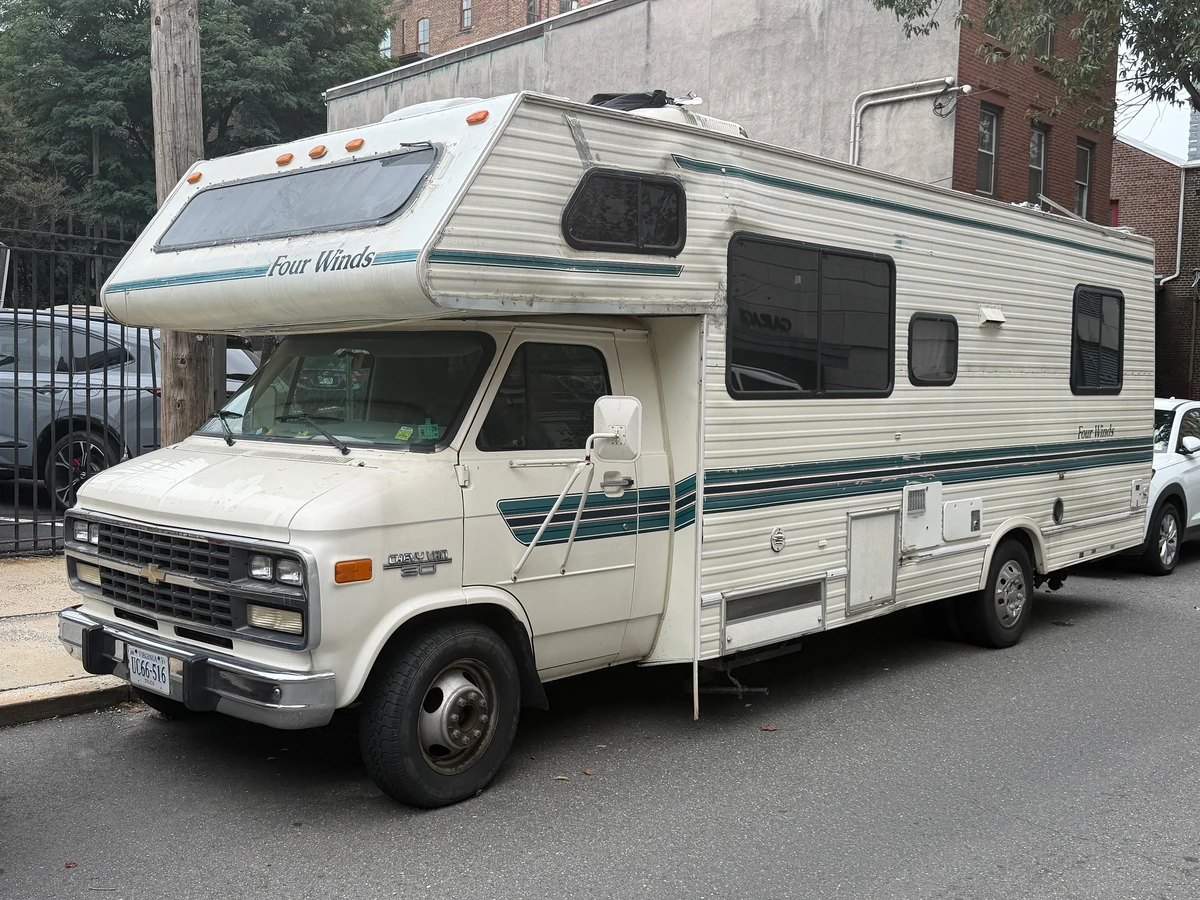
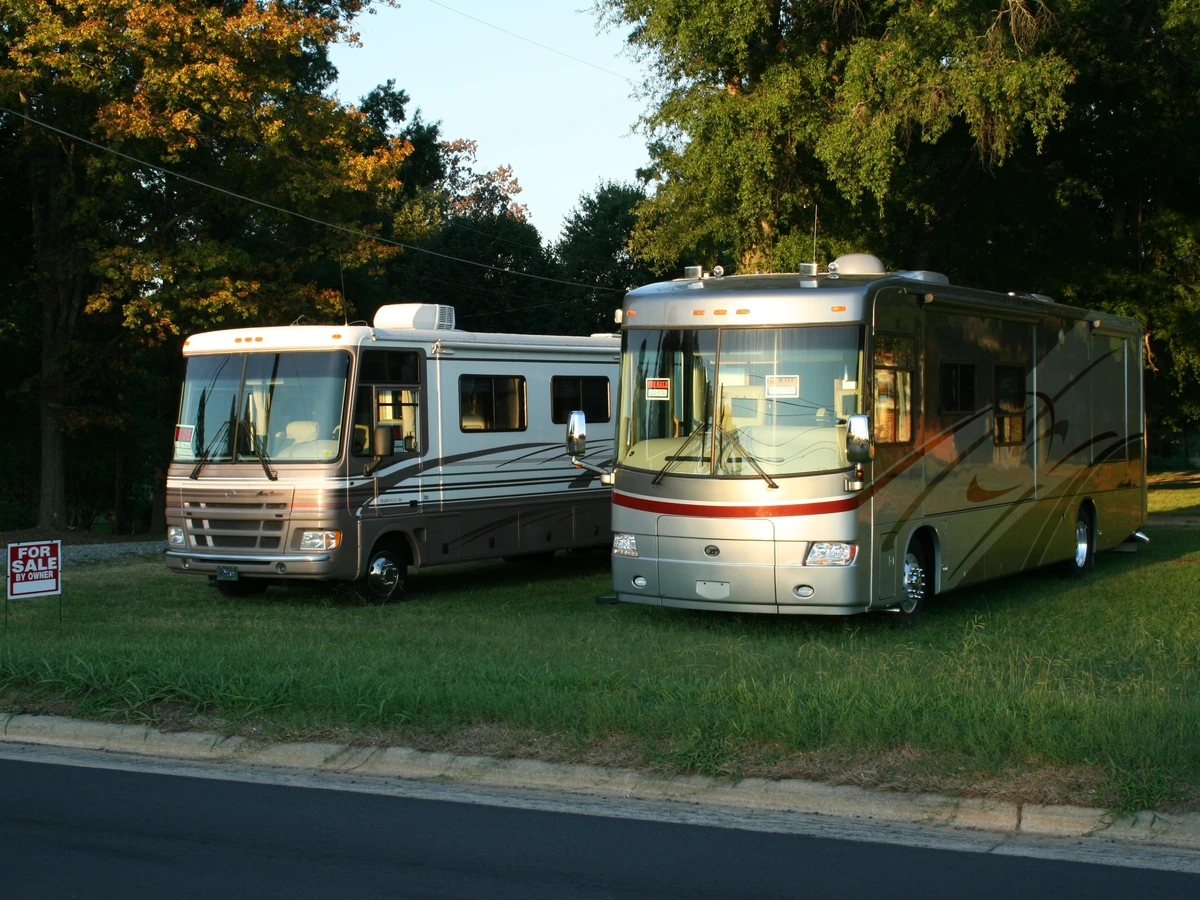
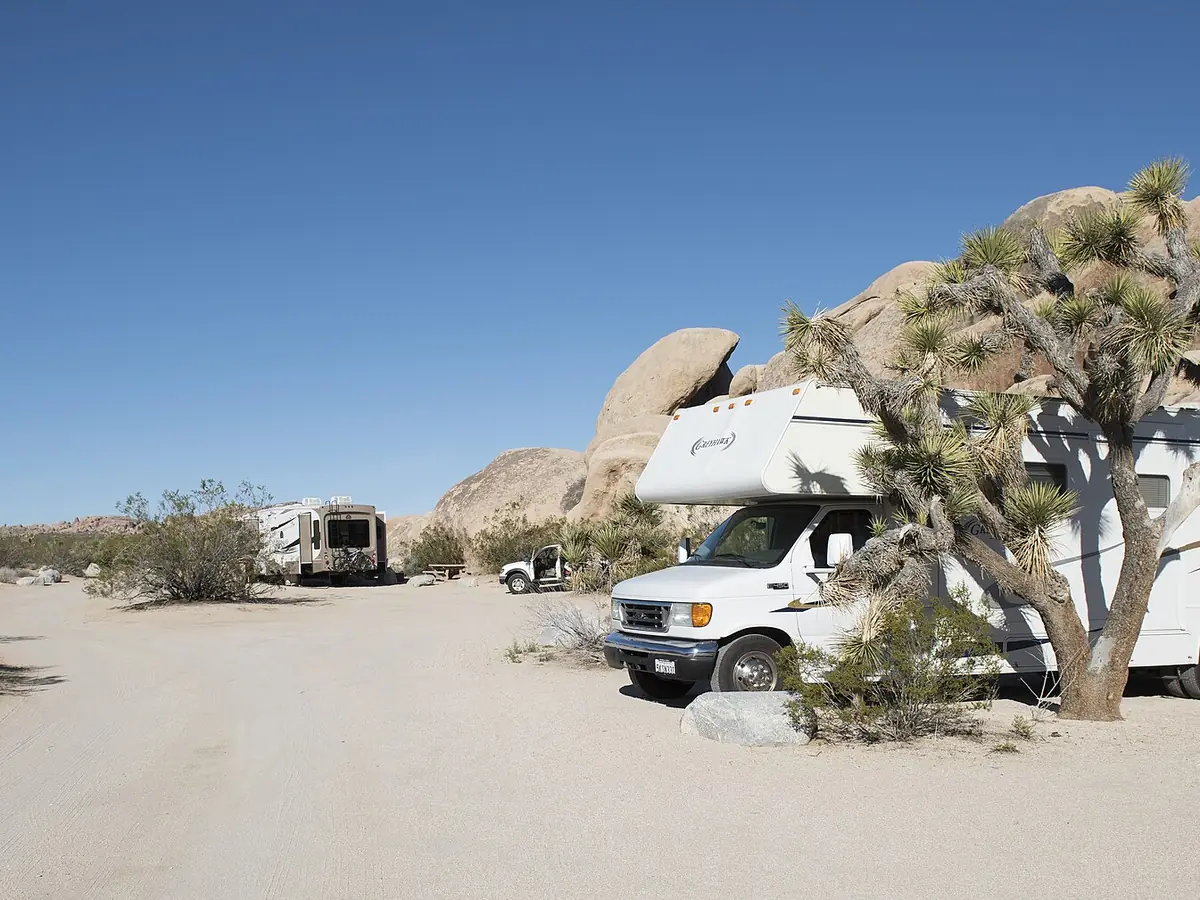
A Class C motorhome. The bunk over the cab adds beds to the sleep count, but it never adds a seat you can ride in. Photo: Oleg Yunakov, CC BY-SA 4.0
Get RV Travel Agency posts first in Google
The Seat Belt Law Covers Your Motorhome
16 is the age that matters. California's seat belt law, Vehicle Code 27315, says no one 16 or older may ride on a highway unless they are properly belted. It covers every passenger vehicle. Vehicle Code 465 says a passenger vehicle includes a housecar, which is the state's word for a motorhome.
Younger riders have their own rules. Kids under 8 ride in a car seat or booster in a rear seat, per Vehicle Code 27360. Kids under 2 ride facing backward unless they weigh 40 pounds or stand 40 inches tall. Kids 8 to 15 need a belt or a car seat, per Vehicle Code 27360.5.
The base fine is up to $20 the first time and up to $50 after that, under the same seat belt law. Court costs and penalty money get added on top of the base fine.
So yes, you can ride in the back of a motorhome. You ride the way you would in a minivan. Sit in a seat that has a belt, and wear it.
That also answers the nap question. The only bed the law excuses is a sleeper berth, a term defined in the state's vehicle rules. A motorhome bed has no belt, so in California a rider 16 or older can't lie in it on the highway.
Nobody Rides in a Travel Trailer
California bans it outright. Vehicle Code 21712 says you can't drive a vehicle that is towing a trailer coach or a camp trailer with a passenger inside. Travel trailers and pop up campers both fall under those words.
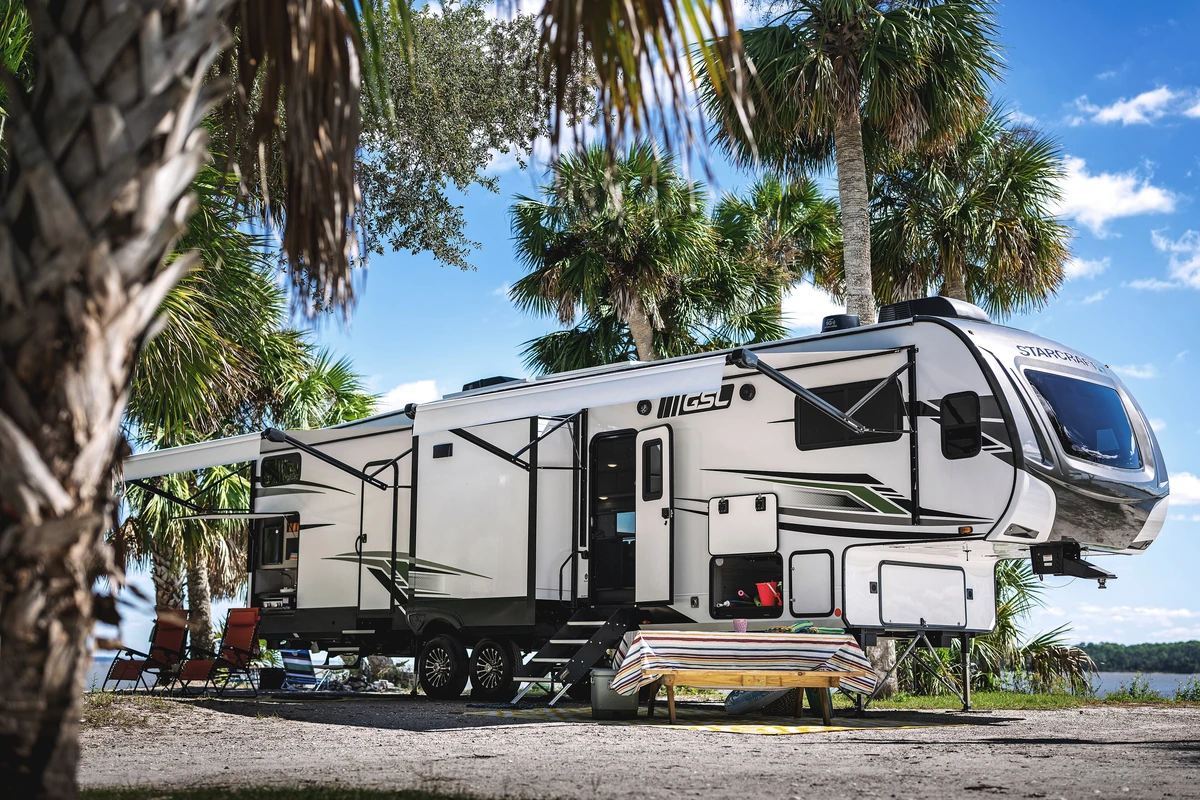
Fifth wheels get one exception in the same law. A fifth wheel may carry riders only if it has three things. It needs safety glass in every window and door, and a sound or light signal the rider can use to reach the driver. It also needs at least one clear exit that opens from inside and outside.
Truck campers are their own case. Vehicle Code 23129 lets people ride in a camper on a pickup only if the camper has a clear exit that opens from both sides.
| Rig | Can someone ride inside while it moves? | The California rule |
|---|---|---|
| Class A, B or C motorhome | Yes, in a seat with a belt on | VC 27315 and 465 |
| Travel trailer or pop up | No | VC 21712(g) |
| Fifth wheel | Only with safety glass, a signal and a two way exit | VC 21712(i) |
| Truck camper | Only with an exit that opens from both sides | VC 23129 |
Even a fifth wheel that checks all three boxes has no car seats inside. The couch and the dinette were built for camp, not for a crash on the freeway. Our advice is simpler. When you tow, put everyone in the truck.
The Rules Change at the State Line
From the Mendocino Coast, US 101 runs north into Oregon. From the Hemet yard, the big roads run east toward Nevada and Arizona. Each state writes its own towing rule, and they don't match.
Oregon is close to California. ORS 811.195 makes it a Class D traffic violation to tow any trailer with a passenger in it. It carries the same fifth wheel exception, with the same three items.
Washington is stricter. RCW 46.61.625 says no one may occupy any trailer while it moves on a public highway. That takes in fifth wheels, with no exception for glass or exits.
Nevada's rule is one sentence. NRS 484B.167 says no person may occupy a house trailer while it is moved on a public highway. The RV Industry Association's state law chart applies that term to travel trailers and fifth wheels alike.
That same chart, dated August 2017, found no Arizona rule on riders in towables at all. No rule is not the same as safe, and Arizona's own seat belt law still applies to the people in the truck.
Plan for the strictest state on your route. If the trip crosses into Washington or Nevada, nobody rides in the fifth wheel, no matter how it's built.
Count the Belts, Not the Beds
5 belts, 6 beds. Our 2022 Winnebago Minnie Winnie 22M sleeps six people, and its spec sheet lists five seat belts. A family of six can sleep in it. Only five of them can ride in it.
The sleeps number counts beds. A bunk over the cab adds to it, and so does a couch that folds flat. Neither one adds a seat you can ride in. Ask for the belt count before you book any motorhome, and ask where each belt sits.
Car seats need the right seat. Car Seats for the Littles warns that many motorhome belts sit on benches that face sideways or backward, and that child seats belong on forward facing seats. California lets a child seat go up front when the rear seats face sideways or backward, per Vehicle Code 27363. It never allows a rear facing seat in front of an active air bag.
Towing makes the car seat question easy. Kids ride in the back seat of the truck or SUV, in the same seats they use at home.
What People Get Backwards
The big myth is that an RV is a house, so house rules apply. On the road it's a vehicle, and California's belt law names it.
A second myth says big rigs are exempt by weight. Some state by state lists online claim a weight exemption somewhere. California's belt law lists no weight exemption at all. Its exemptions cover medical cases, emergency crews and taxis, not motorhomes.
The bathroom question trips people up most. Rental guides often say it's fine in a motorhome if state law allows. In California, every rider 16 and up has to stay belted on the highway. Walking to the back breaks that rule the moment you unbuckle.
Drinks are the odd one out. Vehicle Code 23229 exempts passengers in the living quarters of a housecar from the open container ban. The driver gets no such pass, and the passenger still has to wear a belt.
Plan Stops So Nobody Unbuckles
The fix for all of this is the same. Stop more often, and do the moving around while you're parked.
- Plan a stop about every three hours for the bathroom, snacks and the dog.
- Make lunch and fill water bottles before you pull out.
- Latch the cabinets and the fridge, and stow anything that could fly in a hard stop.
- Put each car seat on a forward facing seat with a belt.
- When you tow, load everyone into the truck before you leave camp.
- Nap sitting up with your belt on, and save the bed for camp.
Our guide to the 3-3-3 rule covers how far to drive in a day and when to stop for the night.
Bringing kids? The family RV rentals page shows the rigs we book for families.
What Folks Ask
Can you legally sleep in an RV while driving?
In California, only sitting up in a seat with your belt on. Every rider 16 and up must be belted on the highway, and an RV bed has no belt. Nap in your seat and save the bed for camp.
Can you use the bathroom in an RV while it's driving?
In a motorhome you can reach it, but in California a rider 16 or older who unbuckles on the highway breaks the seat belt law. Pull over first. It takes five minutes.
Can you ride in a fifth wheel in California?
Only if it has safety glass in every window and door, a signal the rider can use to reach the driver, and an exit that opens from inside and outside. Even then, put everyone in the truck.
Can kids ride in a travel trailer while it's towed?
No. California, Oregon, Washington and Nevada all ban riders in a towed travel trailer. Kids ride in the tow vehicle in their car seats.
Can you walk around in an RV while it's moving?
Not in California if you're 16 or older, since you have to stay belted on the highway. Kids under 16 must be in a belt or a car seat too.
Can you drink in an RV while it's moving?
In California, a passenger in the living quarters of a motorhome is exempt from the open container law. The driver is not, and the passenger still has to wear a belt.
Backing for the Numbers
| What we cited | Where it came from |
|---|---|
| Belts for every rider 16 and up, the exemptions and the base fines | California Vehicle Code 27315 |
| A passenger vehicle includes a housecar | California Vehicle Code 465 |
| Car seats for kids under 8, rear facing under 2 | California Vehicle Code 27360 |
| Belt or car seat for kids 8 to 15 | California Vehicle Code 27360.5 |
| When a child seat may ride in front | California Vehicle Code 27363 |
| No riders in a towed trailer coach or camp trailer, and the fifth wheel exception | California Vehicle Code 21712 |
| Riders in a truck camper need a two way exit | California Vehicle Code 23129 |
| Open container exemption for passengers in a housecar's living quarters | California Vehicle Code 23229 |
| Passenger in a trailer, the fifth wheel exception and the penalty class | Oregon ORS 811.195 |
| No one may occupy a trailer on a public highway | Washington RCW 46.61.625 |
| Section 484B.167, riding in a house trailer | Nevada NRS chapter 484B |
| State by state chart, August 2017 | RV Industry Association, riding in towed RVs and truck campers |
| Where child seats can and can't go in a motorhome | Car Seats for the Littles, RV travel with children |
Written by The yard team. Call or text (909) 259-7837 if you want help picking a rig with a seat belt for everyone on the trip.