20 October 2026 · 7 minute read
The 3-3-3 Rule for RV Living, Tested on a Real Loop
- 300 miles is about 6 hours at the pace we measured on desert roads, before any stops.
- If you leave at an 11 am checkout, 3 pm only works for about 190 miles.
- Crossing into Arizona or Utah can move the clock an hour, and the 3 pm goal with it.
- In late December the sun sets before 5 pm at Joshua Tree, so 3 pm leaves under two hours of light.
- Three nights is the floor. Public land often caps you at 14 days, so full timers move anyway.
- Moving every 3 nights burns about 5 times the fuel of moving every 2 weeks.
Drive 300 miles or less, arrive by 3 pm, stay at least 3 nights. How that holds up on a real 1,391 mile loop, and what it costs if the RV is your home.
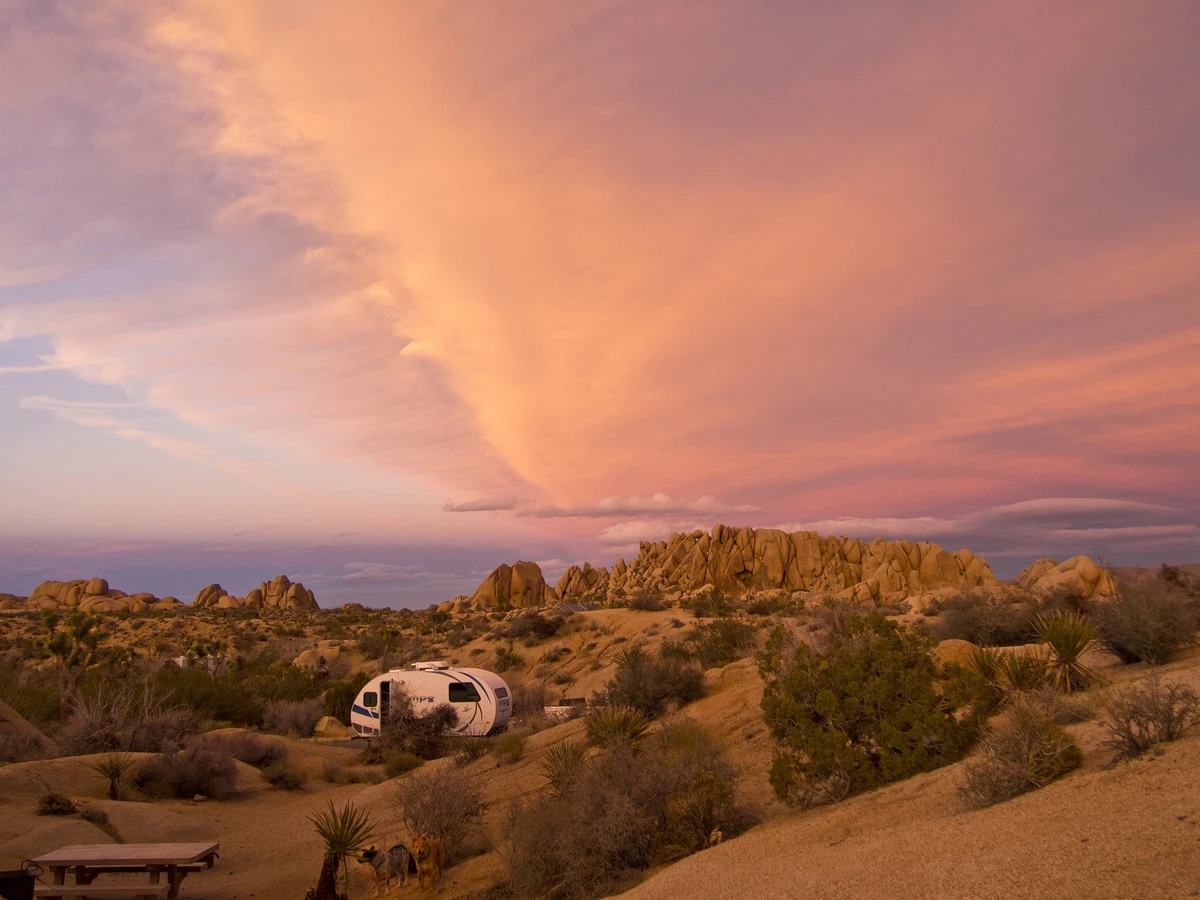
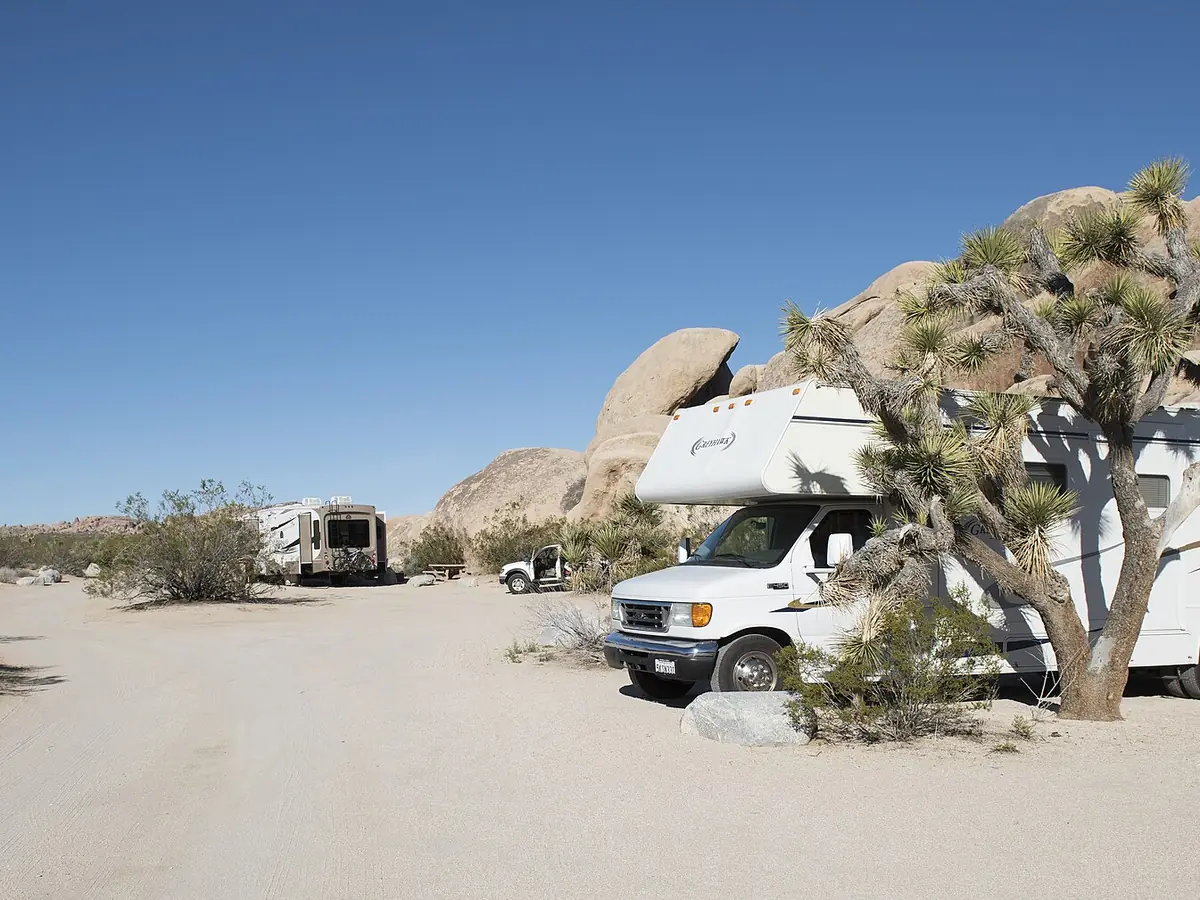
A trailer set up at Jumbo Rocks in Joshua Tree. Get in by 3 pm and this is what the end of a travel day looks like. Photo: Joshua Tree National Park, public domain
Get RV Travel Agency posts first in Google
How the Rule Works
The 3-3-3 rule for RV living is a pace, not a law. Drive no more than 300 miles in a day. Get to your next camp by 3 pm. Stay at least 3 nights before you move again.
It works best as a planning tool. We laid it over a real loop from our yard in Hemet, and it held up. But the three numbers fight each other more than most pages admit.
What the Rule Says and Where It Came From
Nobody owns the 3-3-3 rule. RVers pass it along because it works. The rental and campground pages that rank for it all give the same three parts. Cruise America's version also adds a stop about every three hours.
Each part has a job. 300 miles keeps the driver fresh. Arriving by 3 pm means you back in, level and hook up in daylight. Three nights gives you at least two full days with no packing up.
For a sense of scale, look at what the law allows a truck driver. Under federal hours of service rules, a property carrying driver may drive up to 11 hours in a 14 hour window, and must take a 30 minute break after 8 hours of driving. The 3-3-3 rule asks for about half a trucker's day. That is the point. You are not on the clock, and you are living in the thing you are driving.
A Real 3-3-3 Loop From Our Yard
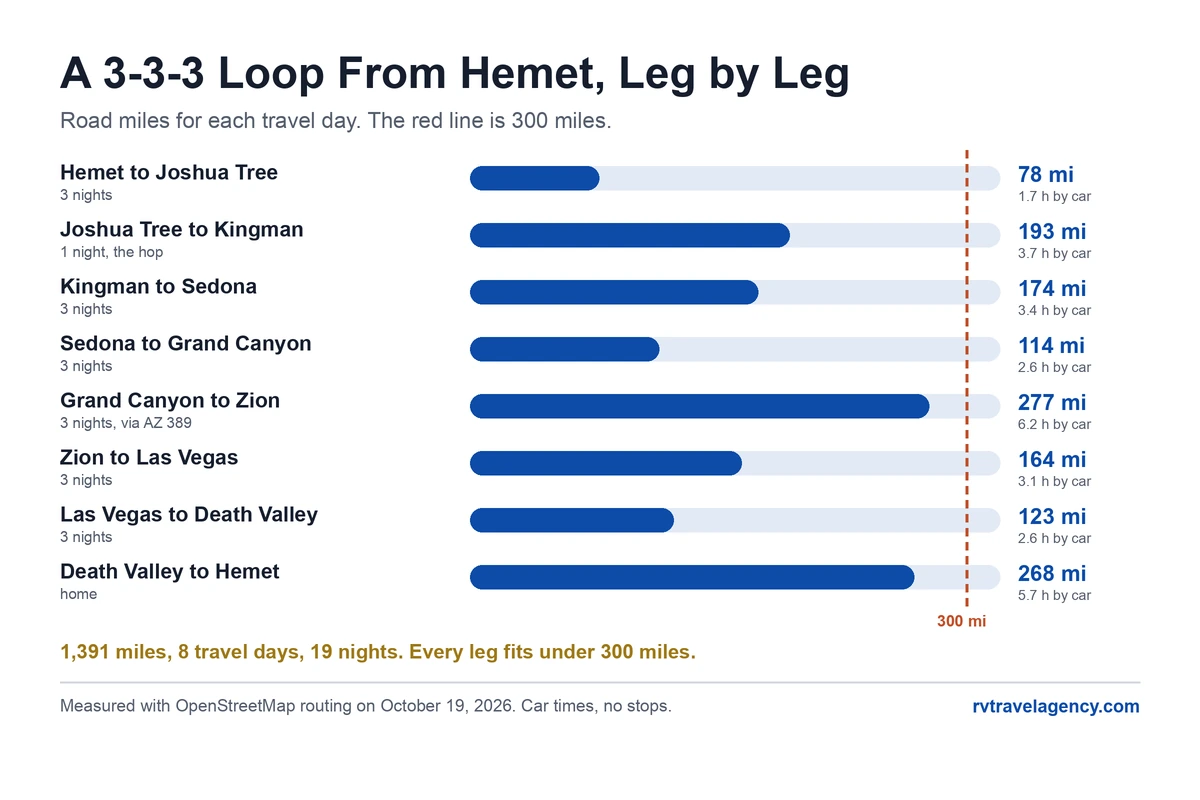
Most pages explain the rule and stop. We wanted to know if it works on a trip people from the Inland Empire really take. So we built a loop through five parks and measured every leg with OpenStreetMap routing on October 19, 2026.
The table is our own measurement. Times are car times with no stops. A motorhome or a truck and trailer will be slower.
| Day | Leg | Road miles | Car time | Nights |
|---|---|---|---|---|
| 1 | Hemet to Joshua Tree | 78 | 1.7 h | 3 |
| 4 | Joshua Tree to Kingman, AZ | 193 | 3.7 h | 1, a hop |
| 5 | Kingman to Sedona | 174 | 3.4 h | 3 |
| 8 | Sedona to Grand Canyon South Rim | 114 | 2.6 h | 3 |
| 11 | South Rim to Zion, by AZ 389 and UT 59 | 277 | 6.2 h | 3 |
| 14 | Zion to Las Vegas | 164 | 3.1 h | 3 |
| 17 | Las Vegas to Death Valley | 123 | 2.6 h | 3 |
| 20 | Death Valley to Hemet | 268 | 5.7 h | home |
Every leg fits under 300 miles. Only one stop breaks the 3 night part. Joshua Tree to Sedona is 365 miles in one shot, so a one night hop in Kingman splits it. That is how real trips go. The rule bends at one spot and holds everywhere else.
Our Death Valley stop only makes sense in the cool season. The park's campgrounds run their main season from mid October to mid April.
The Three Numbers Fight Each Other
Most write ups skip the clock. Campgrounds set checkout late in the morning. At Zion, the park's rules set checkout at 11 am and check in any time after noon, Mountain time. If you sleep in and leave at 11, you have 4 hours to make 3 pm. At the pace we measured on this loop, about 48 miles an hour door to door in a car, that is about 190 miles. Not 300.
So the real rule is to roll by 8 or 9 am. Leave early and the long legs work. Leave at checkout and only the short ones do.
Then the clock moves. Arizona does not use daylight saving time, and Utah does. NIST lists Arizona as one of the places that skips it, except the Navajo Nation. Leave the South Rim at 8 am in summer and our routing puts a car at Zion a little after 2 pm Arizona time. On the Utah clock that is after 3 pm. In winter it goes the other way at the state line. California to Arizona costs you an hour from November to March.
Last is the sun. We pulled sunset times from the U.S. Naval Observatory for Twentynine Palms, by Joshua Tree. On June 21, 2026, the sun set just before 8 pm. On October 20 it sets just after 6 pm. On December 21 it sets 21 minutes before 5 pm. At the South Rim that day it sets 18 minutes after 5 pm, Arizona time. In winter, 3 pm is not early. It is the last good hour to set up.
Three Nights Is the Floor, Not the Ceiling
If the RV is your home, the 3 night part matters most. It is also the part the rules push from the other side. Parks and public land set a top limit on how long you can stay.
Zion limits standard sites to 14 total days per party from March through November, and 44 days in a calendar year. Death Valley allows 14 days a year at Furnace Creek and 30 days a year in the rest of the park. On most Bureau of Land Management land, dispersed camping is limited to 14 days in any 28 day period.
So a full timer on public land lives between two numbers. Three nights to rest. About 14 nights before you have to move. Most people who live on the road land somewhere in the middle.
Weekends are the other squeeze. Joshua Tree says its first come, first served campgrounds are full nearly every weekend from September to May, and usually full by Friday afternoon. A 3 pm Friday arrival there gets you nothing. Book the site, or plan your move days for midweek. Reserved sites there run $30 to $35 a night in 2026, and the walk up sites are $25.
What 3-3-3 Costs When You Live on the Road
For a vacation, the rule costs nothing extra. For RV living, moving every 3 nights adds up. A 30 day month is 10 moves. Our example below uses the average leg on our loop, 174 miles, and a rig that gets 10 miles a gallon.
Fuel prices came from the U.S. Energy Information Administration. For the week of October 12, 2026, regular averaged $4.331 a gallon nationwide and $6.104 in California. Diesel averaged $6.179 nationwide.
| How often you move | Miles a month | Gallons | US regular $4.33 | California regular $6.10 | US diesel $6.18 |
|---|---|---|---|---|---|
| Every 3 nights, 10 moves | 1,740 | 174 | $754 | $1,062 | $1,075 |
| Every 7 nights, about 4 moves | 696 | 70 | $301 | $425 | $430 |
| Every 14 nights, about 2 moves | 348 | 35 | $151 | $212 | $215 |
The gap is the story. At the 3 night pace, fuel alone runs about 5 times what a 2 week pace costs. And that leaves out campground fees, wear on tires and brakes, and the hours you spend packing up.
When to Bend the Rule
The rule is a default. We would break it on purpose in these cases.
- Use a one night hop to split a long leg, like Kingman on our loop. Rest, then go.
- Go slower with the 2-2-2 version, 200 miles, by 2 pm, 2 nights, on a first trip or with kids.
- Stay longer than 3 nights when a site is hard to get. Do not give up a good spot to keep a schedule.
- Move early in winter. With a sunset near 5 pm, aim to arrive by 2 pm instead.
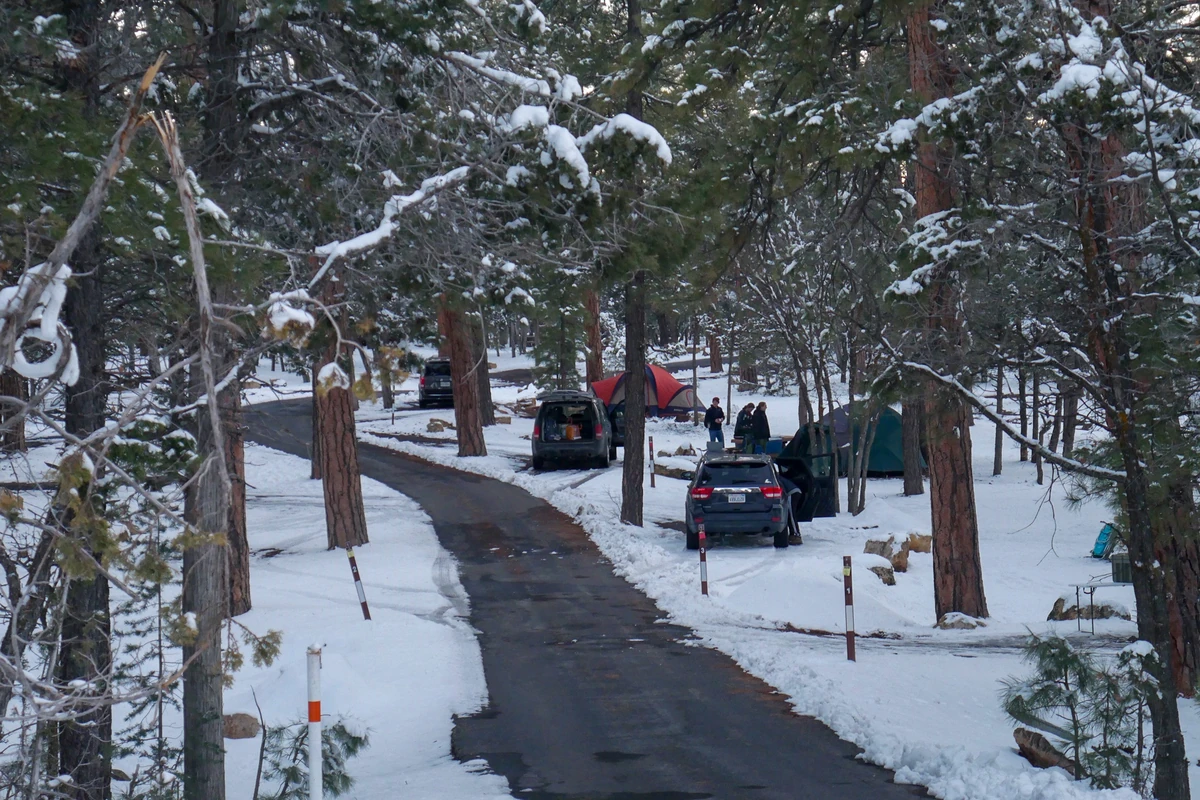
- Drive fewer miles on mountain grades, in wind or in snow, like the South Rim in winter.
- Shift your moves to Tuesday through Thursday when the next stop is a busy park.
Bend the route for a big rig too. Our Zion leg goes around through Hurricane on purpose. Rigs over Zion's size limits cannot drive the tunnel highway in from the east entrance. A single vehicle tops out at 35 feet 9 inches, mirrors and bike racks included. More on that in our national park size guide.
Planning this loop? Our guides cover each stop. Start with Joshua Tree in an RV, then Sedona, the South Rim, Zion and Death Valley.
What People Get Backwards
Most write ups explain the three numbers and stop. Few name a real route, a real checkout time or a real stay limit.
The biggest miss is treating 300 miles and 3 pm as one easy goal. They only fit together if you leave early. The second miss is the clock. A rule built on a 3 pm arrival has to know which time zone you are arriving in.
For RV living, the miss is the money. Three nights is a fine floor for a vacation. If the rig is your home, a slower pace with a few hops in between is easier on the budget, the rig and you.
If your rig is older, our guide on the 10 year rule for RVs covers what private parks check before you book.
What Folks Ask
What is the 3-3-3 rule for RV living?
Drive no more than 300 miles in a day, arrive at your next camp by 3 pm, and stay at least 3 nights before you move. It is a pacing habit that RVers pass along, not a law.
How long does it take to drive 300 miles in an RV?
Plan on about 6 hours of driving, plus stops. On our measured loop through the desert Southwest, a car averaged about 48 miles an hour door to door. A motorhome or a truck and trailer will take longer.
What is the 2-2-2 rule for RV?
It is the slower version. Drive no more than 200 miles, arrive by 2 pm, and stay at least 2 nights. It suits first trips, kids and winter, when the sun sets early.
What time should you leave to arrive by 3 pm?
For a 300 mile day, leave by about 8 or 9 am. If you wait for an 11 am checkout, you can only cover about 190 miles by 3 pm at the pace we measured. Check the time zone at the next stop too.
How long can you stay at a national park campground?
It depends on the park. Zion allows 14 days per party from March through November. Death Valley allows 14 days a year at Furnace Creek and 30 days a year in its other campgrounds.
How long can you camp on BLM land?
On most Bureau of Land Management land, dispersed camping is limited to 14 days in any 28 day period. Local field offices can set their own limits, so check before you settle in.
Backing for the Numbers
| What we cited | Where it came from |
|---|---|
| The common definition, plus a stop every three hours. | Cruise America, What Is the 3-3-3 RV Travel Rule |
| The slower 2-2-2 version, 200 miles, by 2 pm, 2 nights. | Camp Landa RV Resort, The 3-3-3 and 2-2-2 Rules Explained |
| Size limits between Canyon Junction and the East Entrance, and the routes around. | Zion National Park, Large Vehicles |
| 11 hours of driving in a 14 hour window, and a 30 minute break after 8 hours. | eCFR, 49 CFR 395.3, Maximum Driving Time for Property Carrying Vehicles |
| Checkout 11 am, check in after noon, 14 days March to November. Page updated June 2, 2026. | Zion National Park, Camping Regulations |
| 14 days a year at Furnace Creek, 30 days elsewhere, reservation season. | Death Valley National Park, Camping in Death Valley |
| 2026 fees and how fast the walk up sites fill. Page updated August 16, 2026. | Joshua Tree National Park, Campgrounds |
| Dispersed camping generally limited to 14 days in any 28 day period. | Bureau of Land Management, Camping |
| Arizona does not observe daylight saving time, except the Navajo Nation. | NIST, Daylight Saving Time |
| Sunset times for Twentynine Palms and Grand Canyon Village in 2026. | U.S. Naval Observatory, Sun and Moon Data for One Day |
| Weekly retail prices for October 12, 2026. | U.S. Energy Information Administration, Gasoline and Diesel Fuel Update |
Written by The yard team. Call or text (909) 259-7837 if you want help laying out the legs of a trip before you book it.